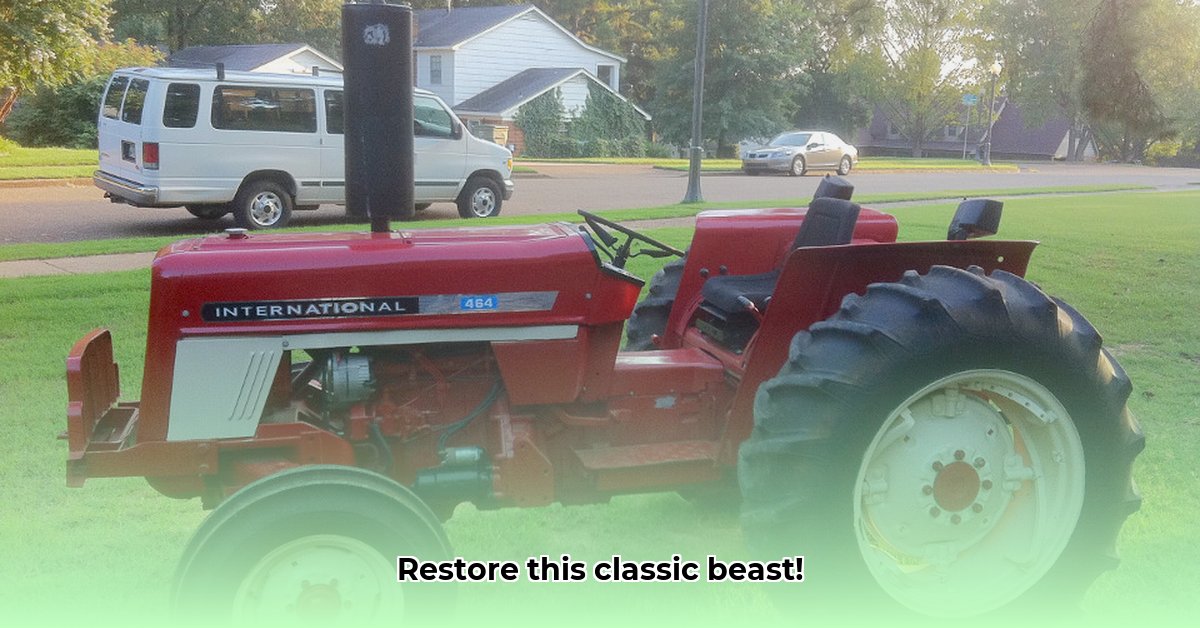
The International Harvester 464 tractor: a robust machine from the 1970s, prized for its balance of power and economy. This comprehensive guide explores its technical specifications, historical context, and current standing in the collector's market. Whether you're a seasoned tractor enthusiast or simply curious about this agricultural icon, we'll uncover the story behind the 464, offering actionable insights for restoration and collecting. For more restoration guides, check out this helpful resource: tractor restoration guides.
Technical Specifications and Features
The International Harvester 464 was designed for practicality and efficiency. Its powerful engine, available in both gasoline and diesel variants, delivered approximately 45-46 PTO horsepower. This, coupled with an eight-speed synchromesh transmission, ensured versatility across various farm tasks. The Category I three-point hitch system facilitated easy implement attachment. Weight varied significantly depending on fuel, optional equipment, and configuration; precise figures require further research into specific model variations. Did you know that inconsistencies in reported weight are primarily due to variations in optional equipment and fuel levels? This is crucial to remember when searching for a 464.
| Specification | Gasoline Engine | Diesel Engine | Notes |
|---|---|---|---|
| Engine Type | Gasoline | Diesel | Specific model numbers significantly impact engine specifics. Further research is needed. |
| Displacement (cu in) | Requires further research | Requires further research | Original sales brochures or manuals are the most reliable sources for accurate data. |
| PTO Horsepower | Approximately 45-46 hp | Approximately 45-46 hp | This is an approximation. Actual figures varied slightly based on model year and condition. |
| Transmission | 8-speed synchromesh | 8-speed synchromesh | Known for its smooth shifting capabilities. |
| Three-Point Hitch | Category I | Category I | Essential for connecting various agricultural implements. |
| Approximate Weight | Varies considerably | Varies considerably | Weight was heavily influenced by fuel load, implements, and optional equipment. |
A Tractor of its Time: The 464 in the 1970s Agricultural Landscape
The International 464 emerged during a period of considerable agricultural mechanization. The 1970s saw a gradual shift towards larger, more powerful tractors. The 464 offered a practical balance of power and affordability making it an attractive option for farmers, particularly those with smaller operations. However, it lacked the advanced features of some competitors, such as a fully enclosed cab or more sophisticated hydraulic systems; this simpler design, however, contributed to its cost-effectiveness and ease of maintenance. A key success factor of the 464 revolved around fuel prices. The choice between gasoline and diesel significantly impacted operating costs, making it a factor in farmer purchasing decisions. As fuel costs fluctuated, so did the 464's market position.
Bringing Back a Classic: Restoring the International Harvester 464
Restoring an International Harvester 464 is a rewarding venture for enthusiasts. Its sturdy build and relatively low production numbers have elevated its status as a desirable collector's item. However, sourcing original parts often proves challenging, requiring patience and networking within collector communities. Online forums, restoration specialists, and parts suppliers specializing in classic tractors are invaluable resources. "Restoring a 464 is a labor of love, but the satisfaction of bringing a piece of farming history back to life is unparalleled," says John Miller, a seasoned classic tractor restorer from Iowa. The potential return on investment for a meticulously restored 464 is significant, reflecting both its historical significance and the considerable effort involved in its restoration.
How to Restore a 1970s International Harvester 464 Tractor: A Step-by-Step Guide
Restoring a 464 requires a methodical approach. This step-by-step guide will provide a framework for a successful restoration:
- Documentation: Thoroughly document your specific model using original manuals, parts diagrams and specifications whenever possible. This is crucial for accurately sourcing parts and understanding the tractor’s intricacies.
- Disassembly: Carefully disassemble the tractor, meticulously labeling and storing each component. This systematic approach minimizes errors during reassembly.
- Cleaning: Thoroughly clean each part to assess damage and rust. This enables a precise evaluation of parts needing repair or replacement.
- Repair and Replacement: Repair or replace damaged or worn components. This step may involve fabricating parts or sourcing used components from specialized suppliers or online forums dedicated to classic tractor restoration.
- Reassembly: Carefully reassemble the tractor, referring constantly to your documentation and diagrams. This detailed approach helps to avoid issues.
- Testing and Refinement: Test all systems thoroughly; fine-tune as needed to ensure optimal performance. This final step is crucial for ensuring your restored tractor’s reliability.
Restoration Challenges and Collectibility
The primary challenge lies in parts availability. Many parts may be obsolete. Sourcing used parts from salvage yards or online forums requires considerable effort. However, the rarity and growing collector interest make a well-restored 464 a valuable asset. Common restoration challenges include: significant rust damage, worn-out hydraulic seals, and damaged electrical components.
Key Takeaways
- The International Harvester 464, produced in the 1970s, offered a practical balance of power and fuel efficiency.
- Restoring a 464 demands meticulous attention to detail, particularly for engine and transmission components.
- Parts sourcing presents challenges; research and networking within collector communities are essential.
- A comprehensive understanding of the tractor’s mechanics is crucial for a successful restoration.
- A restored 464 can become a highly prized addition to a classic tractor collection.